Separate presentation from content management
The public website and Strapi administration run as separate applications. Foundation content can change through the CMS while the frontend keeps control of layout, interaction, and accessibility.
Full-stack software developer
Full-stack nonprofit website · Headless CMS
ACSFI gives the Astro Charitable and Scholarship Foundation a public website for its mission, programs, activity reports, upcoming events, and contact information, backed by a CMS for ongoing updates.
Product showcase
Selected product surfaces and public demonstrations. Demo images use illustrative records; captions identify those examples.
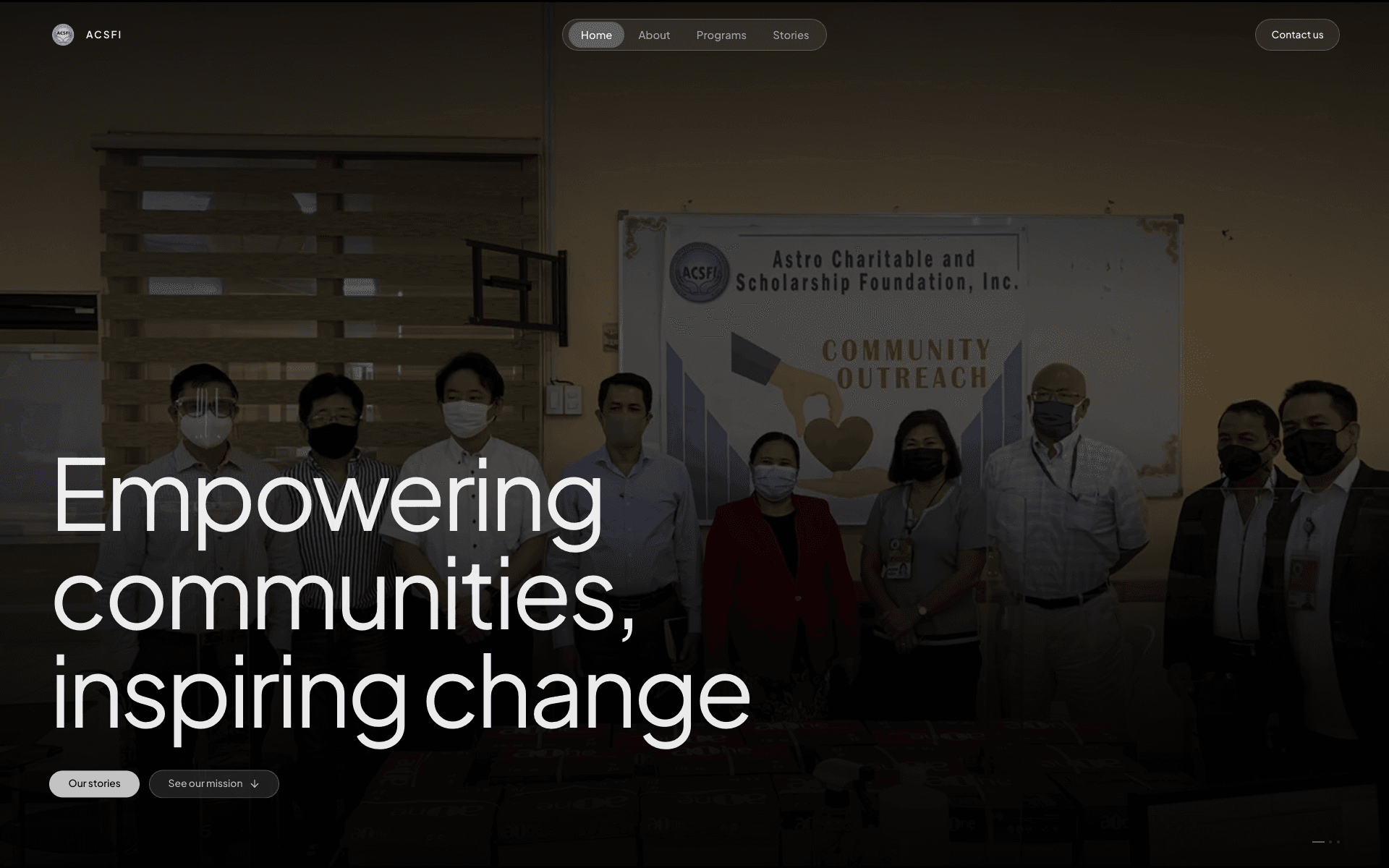
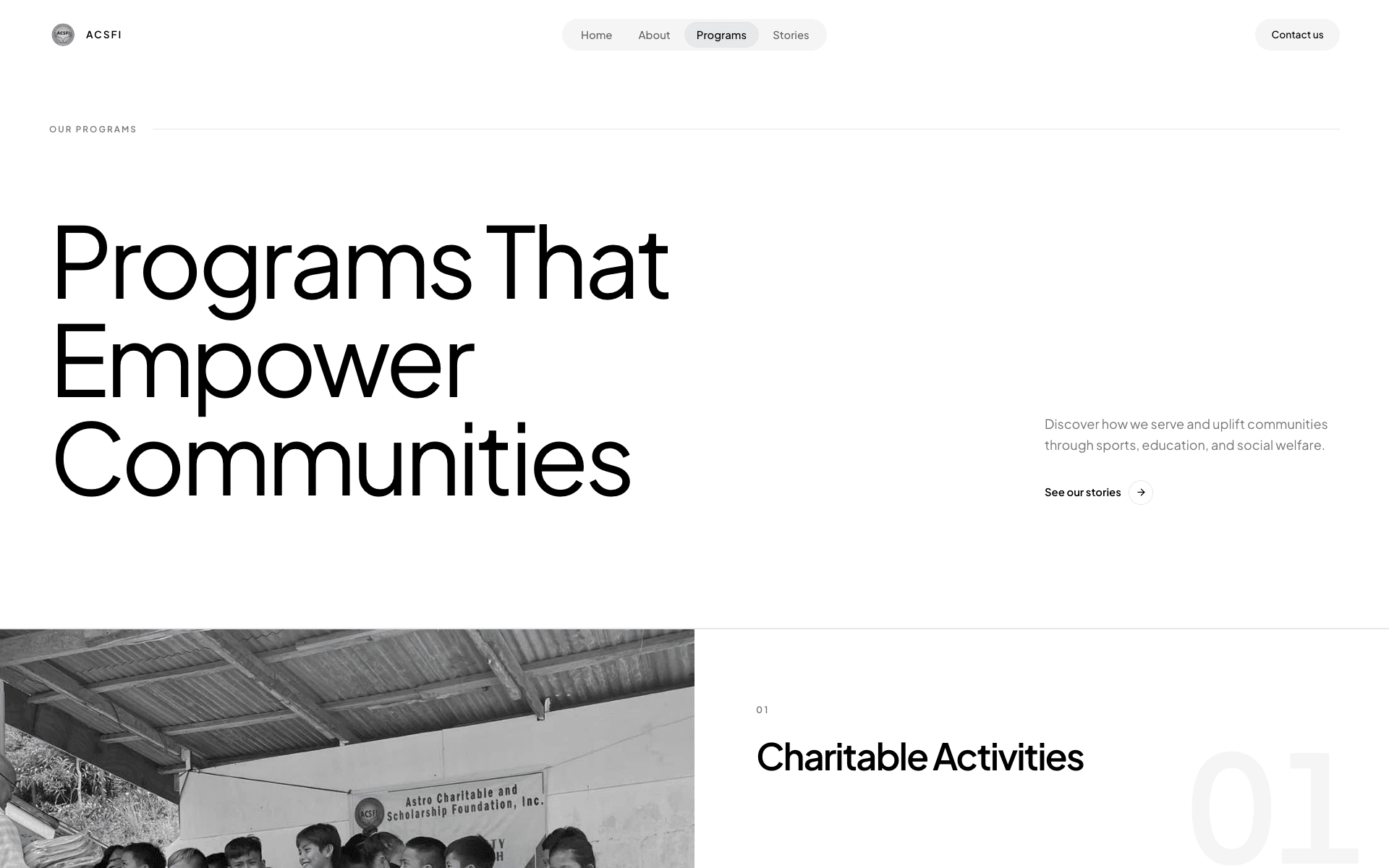
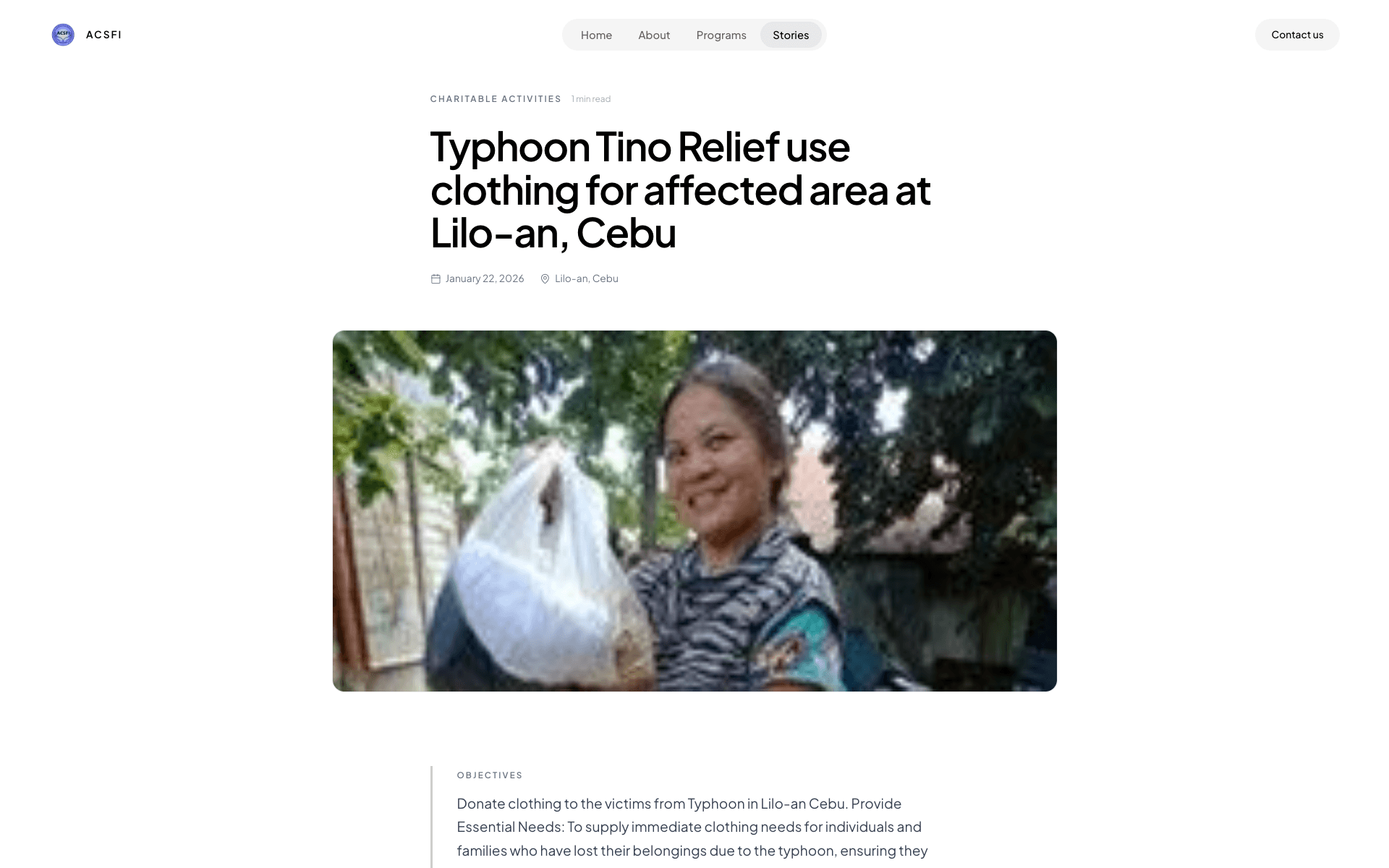
The foundation needed one public source for its programs and community work. New activity reports, event details, statistics, and media also needed to be published without editing the website source for every update.
The website presents the foundation's mission, programs, stories, and contact details through a responsive Next.js frontend. A separate Strapi CMS stores hero media, programs, activities, statistics, quotes, and upcoming events for the public pages to retrieve through a typed API client.
A Bun and Turborepo monorepo contains a typed Next.js frontend and a Strapi backend. The frontend retrieves CMS content through authenticated server-side requests, while MySQL stores production content and Cloudinary serves managed media.
The Pages Router provides the homepage, About, Programs, Stories, individual activity reports, Contact, and a custom not-found page. Static generation and incremental regeneration keep public pages fast to serve.
TypeScript models mirror Strapi entities for activities, programs, media, statistics, quotes, and upcoming events. One server-only fetch wrapper centralizes the API URL, bearer token, and response handling.
Strapi collection and single types give administrators structured fields and program relationships. MySQL stores production records and Cloudinary handles uploaded images and files.
Bun installs the workspaces, Turborepo coordinates tasks, Biome and Lefthook check staged code, and separate Docker configurations support the frontend and CMS runtimes.
These decisions affect what users can do, where product rules live, and how the system handles failure or change.
The public website and Strapi administration run as separate applications. Foundation content can change through the CMS while the frontend keeps control of layout, interaction, and accessibility.
Each activity can store its title, date, venue, participants, objectives, purpose, narrative, authors, program relation, featured state, and media instead of reducing the work to a generic blog post.
Core pages are statically generated from the CMS. The stories index uses incremental regeneration so published activity reports can appear without rebuilding every request on the server.
Turborepo manages the frontend and CMS in one repository, while Vercel, Docker, and the production API configuration allow each application to be built and deployed for its own runtime needs.
The live product and public repository provide concrete evidence of the implemented features, architecture, tests, and documentation.